prime-radiant.xyz · software, data and AI laboratory

Looking to bring AI
into your business?

We help companies and teams turn operational problems into working systems: custom software, data products, automation, AI integration, functional analysis and technical architecture.

ANALYSIS / ACTIVE
ARCHITECTURE / DEFINED
IMPLEMENTATION / MEASURABLE
Functional analysis
ProcessesRequirements, business rules, users, data, workflows and use cases translated into an implementable specification.
AI adoption
AssessmentOpportunities prioritized by business impact, technical feasibility, risk, data readiness and cost.
Development
ProductionPrototypes, applications, data pipelines and integrations built to operate, scale and evolve.
01 · Who we are

A multidisciplinary technology laboratory.

Prime Radiant brings together software engineering, data science, artificial intelligence, functional analysis and systems thinking to design and build technology that solves real operational problems.

We work at the intersection of business processes and technical implementation. That means understanding how an organization operates, identifying where data and automation can create measurable value, and translating that understanding into systems people can actually use.

Our work ranges from early-stage discovery and AI adoption strategy to prototypes, production applications, integrations, analytics platforms and long-term system evolution. We can join a project before the solution is defined, support an existing team, or take ownership of a complete delivery.

01 / SOFTWARE ENGINEERING

Applications and platforms

Web applications, internal systems, APIs, backend services, integrations and technical modernization.

02 / DATA SCIENCE

Data products and analytics

Data pipelines, exploratory analysis, forecasting, classification, experimentation and decision-support systems.

03 / ARTIFICIAL INTELLIGENCE

Applied AI systems

Generative AI, RAG, document intelligence, agents, semantic search, machine learning and evaluation frameworks.

04 / SYSTEMS ANALYSIS

Processes and requirements

Functional analysis, process modeling, business rules, system requirements, use cases and implementation roadmaps.

02 · Examples & capabilities

Examples & ideas of custom automations and solutions.

A selection of tools, automations and products we have engineered and deployed: from AI assistants and process automation to custom enterprise platforms and intelligent experiences.

01 / AI AGENTS & ASSISTANTS

AI Agents & Assistants

Internal assistants, commercial agents, customer support bots, professional copilots and systems that execute multi-step tasks.

What it isConversational software and autonomous agents that understand instructions, search company knowledge and execute tasks.
Problem solvedSlow response times, repetitive inquiries, scattered operational knowledge and manual follow-ups.
Application examplesEmployee internal copilot, customer support assistant, commercial lead qualifier and proposal draft generator.
How it worksUser inputs request → Agent queries vector database/API → Formulates response or triggers workflow → Logs action.
What it needsCompany documentation, FAQs, system access keys (APIs/CRM) and defined user permission levels.
Key considerationsData privacy, response accuracy validation, human-in-the-loop oversight and API usage costs.
02 / PROCESS AUTOMATION

Process & Operations Automation

End-to-end workflows connecting systems, generating reports, processing orders and syncing operational data without manual entry.

What it isAutomated software pipelines that connect separate platforms, process events and execute business rules automatically.
Problem solvedDouble data entry, human copy-paste errors, delayed approvals and uncoordinated system updates.
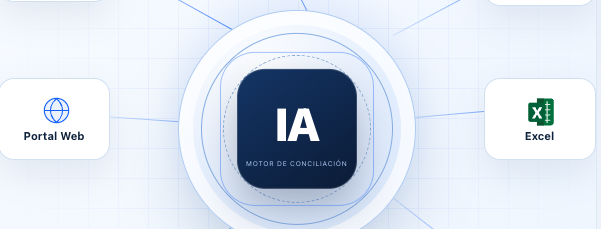
Application examplesAutomatic order intake, invoice reconciliation, budget generation, status notifications and daily report aggregation.
How it worksTrigger event (email/webhook) → Data extraction & validation → Execution of business rules → Update target ERP/CRM.
What it needsAPI access to business applications, defined business rules, error handling policies and test credentials.
Key considerationsSystem uptime, exception routing, audit logging and security credential management.
03 / ENTERPRISE SOFTWARE

Custom Enterprise Software

Tailored internal platforms, management tools, client portals, custom CRMs and operational dashboards designed for your exact workflow.

What it isFull-stack web applications and internal tools built around your team's specific business processes.
Problem solvedGeneric off-the-shelf software that doesn't fit internal workflows, forcing reliance on chaotic spreadsheets.
Application examplesOperations portal, client management system, custom booking & dispatch tool and supplier portal.
How it worksModern web frontend (React/HTML5) + Secure backend API (Node/Python) + Central database (PostgreSQL/MySQL).
What it needsFunctional specification, user role definitions, existing data migration scripts and hosting infrastructure.
Key considerationsUser role security, data backup strategies, maintainability and scalability requirements.
04 / DIGITAL PRODUCTS

Digital Products & SaaS MVPs

Web applications, mobile apps, SaaS platforms, membership systems and complete new tech products built from zero to launch.

What it isProduction-ready software products, marketplaces or SaaS platforms built to be commercialized or scaled.
Problem solvedTurning a product vision or prototype into a robust, scalable digital product ready for real users and monetization.
Application examplesSaaS web platform, multi-tenant portal, subscriber membership system and MVP for tech startups.
How it worksUX/UI architecture → High-performance frontend → Scalable backend & database → Billing/Payment integration.
What it needsProduct vision, target user personas, feature priorities and payment gateway merchant accounts (Stripe/MercadoPago).
Key considerationsScalability under load, subscriber authentication security, continuous deployment and user analytics.
05 / DATA & BI

Data & Business Intelligence

Executive dashboards, data centralization, intelligent search, predictive analytics, automated alerts and decision support systems.

What it isUnified data architecture and visual analytics platforms that turn raw operational records into actionable insights.
Problem solvedDispersed data across separate databases and files, making real-time business visibility impossible.
Application examplesReal-time KPI dashboard, sales forecasting model, automated anomaly alerts and executive reporting suite.
How it worksData extraction (ETL/ELT) → Data warehouse storage → Analytics engine processing → Interactive dashboard rendering.
What it needsDatabase connection strings, data dictionary, key business metrics definition and access rights.
Key considerationsData quality validation, update frequency, latency requirements and historical data governance.
06 / CUSTOMER EXPERIENCE

Smart Customer Experiences

AI-powered search, product recommenders, interactive configurators, buying concierges and personalized customer journeys.

What it isCustomer-facing interactive tools that guide users, recommend solutions and personalize e-commerce or portal experiences.
Problem solvedStatic search bars, high customer drop-off during selection, and generic non-personalized storefronts.
Application examplesAI semantic product search, dynamic product recommender, automated quote generator and interactive product builder.
How it worksReal-time user input → Embeddings & vector matching → Recommendation algorithm → Personalized UI rendering.
What it needsProduct catalog, user behavioral logs, inventory API and UX interaction wireframes.
Key considerationsReal-time latency (< 200ms), catalog sync frequency and fallback recommendations.
07 / DOCUMENT INTELLIGENCE

Document Intelligence & Extraction

Software that reads, interprets and transforms receipts, invoices, contracts, forms and emails into structured spreadsheet or database records.

What it isAdvanced OCR and document processing engines (like dOCR) that automatically extract and validate text and table fields.
Problem solvedHours spent manually typing data from receipts, invoices, bank statements or PDFs into management systems.
Application examplesAutomated invoice reader, contract clause extractor, receipt parser to Excel and bank voucher validator.
How it worksDocument ingest (PDF/Image) → OCR & Layout Analysis → Field extraction → Rule validation → Export to Excel/Database.
What it needsSample documents, target field schema, validation rules and target destination format.
Key considerationsDocument quality variations, local execution vs cloud processing, and human verification for edge cases.
08 / KNOWLEDGE SYSTEMS

Knowledge Systems & RAG

Private search engines and QA systems capable of querying internal manuals, policies, procedures and contracts with accurate citations.

What it isRetrieval-Augmented Generation (RAG) systems that search internal documents semantically and produce precise answers with source references.
Problem solvedEmployees spending hours searching through long manuals, policy PDFs or internal wikis for specific answers.
Application examplesLegal document search, technical maintenance QA bot, HR policy assistant and medical procedure query engine.
How it worksDocument chunking & vector indexing → Semantic vector search → Context assembly → LLM response with document page citations.
What it needsInternal documentation repository (PDF, DOCX, Markdown), update schedule and access permissions.
Key considerationsHallucination prevention through strict grounding, vector index freshness and document access security.
09 / COMPUTER VISION

Computer Vision & Image Analysis

Software that interprets images and video feeds for quality control, object detection, label reading, defect analysis and industrial monitoring.

What it isVisual AI models that process photos or video frames to detect objects, measure dimensions or identify anomalies.
Problem solvedManual visual inspection bottlenecks, human error in defect detection, and lack of automated inventory monitoring.
Application examplesIndustrial defect detection, barcode & label reader, vehicle condition analysis and packaging inspection.
How it worksCamera/Image capture → Preprocessing → Neural network inference → Classification/Detection output → Alert trigger.
What it needsDataset of annotated images (good vs defective), camera hardware specs and inference performance targets.
Key considerationsLighting conditions, camera resolution, edge device computing power and dataset training quality.
10 / VOICE & AUDIO

Voice & Conversational Interfaces

Speech-to-text, meeting transcription, automated voice response, call sentiment analysis and voice-guided operational tools.

What it isSystems that listen, transcribe, synthesize voice and analyze audio conversations in real time or batch mode.
Problem solvedUnrecorded meeting insights, manual call center auditing, and friction in hands-free operational tasks.
Application examplesAutomated meeting summary generator, call center quality scoring, voice-driven inventory input and phone intake bots.
How it worksAudio stream → Speech-to-Text model (Whisper) → Natural language processing → Summary/Action generation → Optional Text-to-Speech.
What it needsAudio inputs/phone line integrations, vocabulary/jargon glossaries and privacy consent protocols.
Key considerationsAudio noise handling, regional accents, latency for interactive calls and speaker diarization accuracy.
11 / PREDICTION & DETECTION

Predictive Analytics & Anomaly Detection

Machine learning models that analyze historical patterns to forecast demand, prevent customer churn, detect fraud and schedule preventive maintenance.

What it isStatistical and machine learning algorithms that identify hidden patterns in historical data to forecast future events.
Problem solvedUnplanned equipment downtime, inventory stockouts, undetected financial fraud and lost sales opportunities.
Application examplesDemand forecasting, equipment failure alerts, customer churn risk scoring and transaction anomaly flags.
How it worksHistorical data cleaning → Feature engineering → Model training & validation → Real-time scoring pipeline.
What it needsClean historical dataset (preferably 1+ years), defined outcome target variable and validation metrics.
Key considerationsModel drift over time, false positive trade-offs, data cleanliness and retraining schedules.
12 / GENERATION & PERSONALIZATION

Content Generation & Personalization

Regulated systems that generate technical documentation, proposal drafts, marketing material, product descriptions and custom assets under strict rules.

What it isControlled generative AI pipelines that produce text, code or assets tailored to brand rules and technical specs.
Problem solvedRepetitive drafting of sales proposals, catalog descriptions, technical manuals or custom communication.
Application examplesAutomated commercial proposal writer, e-commerce product copy generator and technical documentation builder.
How it worksTemplate structure + Input parameters → Rule-guided LLM generation → Automated compliance check → Output draft.
What it needsBrand style guides, reference templates, terminology rules and approval workflow definition.
Key considerationsTone of voice control, plagiarism avoidance, human review step and content safety guardrails.
03 · Services

Technical capability to understand, decide and build.

We can contribute before a solution exists, during an active development effort, or to systems already in production that need to evolve.

01

AI adoption consulting

Process assessment, data and tool inventory, use-case discovery, risk evaluation and prioritization by impact, feasibility and cost. The output is an executable roadmap, not a generic presentation.

02

Functional and systems analysis

Stakeholder discovery, current- and future-state process modeling, business rules, functional and non-functional requirements, user stories, acceptance criteria, integrations and traceability.

03

Custom software development

Web applications, internal systems, management dashboards, portals, APIs and backend services built around the organization’s actual workflows.

04

Automation and systems integration

System-to-system integration, repetitive-task automation, document processing, validation workflows, notifications, reporting and data synchronization.

05

AI assistants, bots and agents

Conversational assistants, internal support bots and AI agents that answer questions, search company knowledge, automate tasks and connect with existing business systems.

06

Architecture and modernization

Assessment of existing systems, target architecture design, refactoring, migrations, observability, security and preparation for growth.

04 · Delivery process

From an unclear need to a verifiable solution.

Each stage produces concrete deliverables. The goal is to reduce uncertainty before increasing investment and to build only what makes sense to operate.

01 / DISCOVERY

Understand the context and objective

Interviews, review of processes, systems, data and constraints, followed by a precise definition of the priority problem.

02 / ANALYSIS

Specify the solution

Process maps, requirements, use cases, risks, dependencies and acceptance criteria.

03 / VALIDATION

Validate feasibility

Prototype or proof of concept using representative data and scenarios to measure quality, cost and limitations.

04 / DEVELOPMENT

Build and integrate

Iterative implementation across interface, backend, integrations, testing, security and technical documentation.

05 / OPERATIONS

Deploy and improve

Production deployment, monitoring, evaluation, support and continuous improvement based on usage and observed results.

05 · Portfolio

Selected work.

Software and artificial intelligence applied to operational needs.

DOCUMENT INTELLIGENCE

dOCR — Windows document processing software

dOCR is a Windows application based on OCR and artificial intelligence techniques applied to document recognition. It automatically detects receipts and their fields, organizes the information and exports the results to Excel, with all processing performed locally.

View project →

06 · Blog

Field notes on AI and software systems.

Practical articles on AI adoption, local language models, document intelligence and the use of data for business decisions.

AI ADOPTION · 8 MIN READ

How to bring AI into your business

A practical framework for selecting a real use case, validating it with representative data and moving from a prototype to an operated system.

ConsultingGovernanceImplementation
Read article →
LOCAL MODELS · 9 MIN READ

When a local LLM is the right architecture

How to decide between local inference and cloud APIs by examining privacy, latency, hardware, quality, concurrency and operating cost.

Local LLMArchitecturePrivacy
Read article →
DOCUMENT INTELLIGENCE · 10 MIN READ

OCR is not the workflow

A production document-processing system needs classification, field extraction, validation, exception handling, traceability and export—not only text recognition.

OCRAutomationValidation
Read article →
DATA SCIENCE · 9 MIN READ

Data analysis and data science for business

What each discipline does, how they work together and how a company can move from disconnected records to measurable decisions and predictive systems.

Data AnalysisData ScienceDecision Systems
Read article →
> endpoint = "prime-radiant.xyz"
> contact.channel = "hello@pradiant.xyz"

Tell us about the process, problem or product.

The first conversation determines whether the right next step is functional analysis, an AI adoption assessment, a prototype or a full development project. We define the initial scope, key risks and next steps.

hello@pradiant.xyz
© 2026 prime-radiant.xyzConsulting · Functional analysis · Software · Data science · Artificial intelligence